Showing posts with label urban. Show all posts

July 1, 2009

Advanced Wood Combustion: Rekindling Wood Energy in America


Opened in February 2009, the new biomass power plant at Vermont's Middlebury College is expected to burn 20,000 tons of wood chips each year to provide heat and electricity for the campus.

The plant uses an "advanced wood combustion" system. Such plants hold great potential to save energy, cut costs, and even fight global warming, a March 2009 study says.

Photograph by Brett Simison, courtesy Middlebury College


Daniel Richter is professor of soils and forest ecology at Duke University and Director of Graduate Studies for Duke’s interdepartmental University Program in Ecology. His research investigates forest sustainability, biogeochemistry, interactions of soil and forests with the wider environment, and global soil change.

Below are excerpts from an article he wrote recently for Renewable Energy World.com about advanced wood combustion (AWC) and its promise for helping understand the intertwining of the carbon cycle and combustion - and how we can efficiently tap that energy for fuels, power, steam, and heat.

------------------
Rekindling Wood Energy in America - Renewable Energy World

One of the largest sources of renewable energy available today is one of the oldest, that is direct combustion of wood. Recent European developments in advanced wood combustion (AWC, defined as automated, high-efficiency wood-fired energy systems with strict air pollution control) have wood supplying thermal and electrical energy cleanly and reliably to thousands of communities in Europe and increasingly in North America. AWC minimizes air pollutants including fossil greenhouse gases.

AWC is so clean and safe that AWC systems are commonly deployed in the midst of picture-perfect European towns and villages. Because AWC systems can be developed in community-sized increments of 0.1 to 20 MWth, they can be managed to meet community needs and not overwhelm the productivity of local woodsheds.

Wood in the United States is several-fold less expensive per unit of energy compared with natural gas or heating oil ($2 to 5 per GJ vs $7 to 10 per GJ for recent USA prices of natural gas and heating oil). If properly deployed, AWC systems can not only affordably supply clean and renewable energy, AWC can add value to the forest itself, promote community development, and support local employment and rural and municipal economies. AWC can complement other renewable energy resources as well.

It is now time for AWC and renewable thermal energy sources to take center stage in North American energy deliberations. Not only can wood safely and affordably supply energy, but wood can teach us much about energy in general, energy-use efficiency, and sustainability itself.

No one renewable will solve our energy crisis, not solar, not wind, not wood. But recent multi-agency estimates indicate that AWC can sustainably supply at least 5% of the nation’s currently inefficient energy consumption without impacting forests that are protected for environmental, social, or economic reasons. This is more energy that that stored in our Strategic Petroleum Reserve, more than what all American hydro-power plants produce in a year, and slightly more than half of the electric energy produced annually by the entire nuclear industry.

Wood is abundant but is far too valuable to inefficiently burn. Resource policy questions should turn on how to encourage wood-energy efficiency, community development and sustainability, and how to avoid extracting wood from the forest like coal from a mine.

July 24, 2008

Redefining "renewable biomass" in EISA

As we strive to find sustainable alternatives to the demonstrably unsustainable fossil fuel paradigm the definition of "renewable biomass" is critically important. It is not just biofuels, biopower, or bioproducts that are (or are not) environmentally sustainable. Sustainability is a function, too, of the feedstock - and it may vary by region. Corn grown in the midwest might be sustainable while corn grown in California might not be for any number of reasons - water, pests, climate, topography, or soil to name a few. And that doesn't begin to address the question of economic sustainability which is determined by a host of other factors like capital availability, markets, infrastructure, ownership, manpower, and subsidies.

Bruce Dale of Michigan State University said at the 2008 California Biomass Collaborative "All biomass is local. And, as Tip O'Neil used to famously assert 'All politics is local.' So the obvious syllogism is that 'All biomass is political!'"

Funny if it wasn't so true.

Which is why it makes no sense for a federal definition of "renewable biomass" to be exclusionary (which is the way that it is as currently defined in the EISA law). It should be as inclusive as possible - allowing local considerations to determine what is environmentally and economically sustainable.

I think this is the inferred conclusion of an excellent "renewable biomass" testimony made today by Environmental and Energy Study Institute Senior Advisor Jetta Wong in her presentation at a hearing of the U.S. House of Representatives Committee on Agriculture Subcommittee on Conservation, Credit, Energy, and Research.

Here are some key points that she made in her summary and conclusion.

Summary:
On December 19, 2007 the President and Congress took a huge step forward in trying to mitigate climate change and reduce our country’s reliance on fossil fuels by enacting the Energy Independence and Security Act (EISA, P.L. 110-140). EISA substantially increases the Renewable Fuel Standard (RFS), calling for the production by 2022 of 36 billion gallons of renewable fuel with specific targets for greenhouse gas reductions. Within the 36 billion gallon mandate, 21 billion gallons must come from advanced biofuels, which means renewable fuel other than ethanol derived from corn starch. Additionally, there is a carve-out within the advanced fuels mandate that 16 billion gallons of cellulosic biofuel be derived from ‘renewable biomass.’

This is an aggressive and ambitious RFS. It is laudable, but it stirs up a lot of difficult issues regarding the sustainability of biofuels. One of the biggest factors in determining if a biofuel is sustainable is the choice of feedstocks used to produce the renewable fuel. Unfortunately, the definition of ‘renewable biomass’ included in the law deems several feedstocks ineligible, including thinning materials and woody residues from federal forests, some woody feedstocks from private forests, and a wide array of feedstocks from municipal solid waste.

Key Points :
• Renewable fuels are important to our climate and energy security strategy. They are reducing our dependence on foreign oil, reducing the cost of gasoline at the pump, and if produced sustainably, reducing greenhouse gas emissions.
• Renewable fuel facilities provide a market for low-value material produced through forest management practices.
• Abundant sources of woody biomass in the west can increase the distribution of liquid transportation fuels across the country. This will help to meet the large fuel markets of the west while further securing our energy supply.
• Mill residue and other woody materials create complications (in terms of collection) and should be carefully considered during implementation.
• Municipal solid waste is a low-value feedstock that several companies are investigating. Confusing or varying definitions included in public law create risk, limit innovation, and ultimately reduce the use of a feedstock currently considered a problem.
• Production of renewable fuels from low-value materials, such as woody biomass and municipal solid waste, reduces the pressure to develop feedstocks on sensitive land.
• A variety of stakeholders overwhelmingly support a broadening of feedstocks that could be eligible for the RFS. Specifically, low-value woody biomass sustainably harvested from both federal and private lands should be included.

Cellulosic biofuels can be produced from a highly diverse array of feedstocks, allowing every region of the country to be a potential producer of this fuel. (Cellulose is found in all plant matter.) As a result, support for cellulosic biofuels has brought together a broad array of constituents including environmentalists, farmers, national security experts, industry, and religious leaders. Unquestionably, the production of renewable fuels needs to be done in a way that sequesters carbon and enhances natural resources, including soils, water supply and native habitats. Production of renewable feedstocks should not be deemed to be in competition with the goals of sustainable agriculture or forestry. In fact, there are opportunities for renewable fuel and energy production to aid conservation efforts and environmental sustainability beyond those associated conventional agriculture, forestry or fossil fuel production and consumption.

Conclusion:
The wisest course of action would be to focus on feedstocks that do not compete for land resources, such as low-value forest residues and other waste materials. The RFS is a very aggressive mandate, but it is not an impossible one, as long as we do not exclude any of those feedstocks that can be produced sustainably and that meet important environmental and greenhouse gas emissions reductions. With conversion technologies still in development, we must keep our options open and strive to produce renewable fuels that meet objective and appropriate standards of sustainability. Fortunately, our nation possesses abundant and readily available feedstocks that satisfy this criterion.

----------------
technorati , ,

March 28, 2007

Environmentalists and industrialists meet at the BioEnergy Wiki

One of the most encouraging signs that joint interests of environmentalists and industrialists are finally being addressed is the emergence of the online BioEnergy WIKI. Much like the Wikipedia that most use to find definitions and clarification of technical issues, this WIKI is in large measure written and edited by interested readers - often foremost experts in their fields.

It is the brainchild of an international Steering Committee that includes: Gustavo Best (UN Food and Agriculture Organization, Italy); Barbara Bramble (National Wildlife Federation, USA); Bill Holmberg (American Council on Renewable Energy /ACORE, USA); Suzanne Hunt (Worldwatch Institute, USA); Juergen Maier (German NGO Forum on Environment & Development, Germany); Roberto Smeraldi (Amigos da Terra - Amazônia Brasileira, Brazil); Annie Sugrue (CURES, South Africa).

It is currently being ably managed by Barbara Bramble (l in photo) and produced by Richard Forrest (r) and Daniel Gillman (c) of the National Wildlife Federation in Washington, D.C. I visited them in their offices and was impressed by their dedication to making the Bioenergy WIKI a communal resource that would bring diverse stakeholders to a common repository of information. Aside from an online glossary and hierachical set of technical definitions, the website has newsfeeds from some of the most respected bioenergy websites and blogs. It also features an events area for tracking upcoming conferences around the world.

It is an important communications component of the American Council of Renewable Energy's Biomass Coordinating Council chaired by Bill Holmberg. One task of the group is to get its many members to write content for the WIKI as well as raise funds to help finance its maintenance and expansion.

----------------
The BioEnergy WIKI
www.bioenergywiki.net
Building the Knowledge Base for the Future of Bioenergy

Join the BioenergyWiki community, and share your knowledge to promote sustainable bioenergy!

The BioenergyWiki was developed in cooperation with the CURES network and an international Steering Committee to serve as a tool to facilitate the sharing of information and views from experts and stakeholders. It is also being used to support the work of the Roundtable on Sustainable Biofuels, a multi-stakeholder process to develop international standards for sustainable biofuels production and processing, the Biomass Coordinating Council of The American Council on Renewable Energy (ACORE), and other initiatives and networks.

The website is a “wiki,” which means that users can easily add to and edit the website content and develop a shared repository of knowledge. This wiki can serve as a comprehensive hub for sharing updated information in the months and years ahead, on technologies, policies, events, news, key organizations, and other resources.

We encourage you to visit this website to learn more about bioenergy, share your knowledge, and continue to refine the sustainability criteria for bioenergy.

technorati , , , ,

January 13, 2007

Low heat gasification converts woody biostock to energy

The thermal process of gasification is one way to break down the bonds of cellulosic feedstock into syngas (primarily CO and H2). Some processes, like plasma arc, uses extremely high heat to "vaporize" the biostock.

Here is an announcement from Germany about a company that has been getting very promising results from gasifying at a lower heat level. They claim, based on experiments with woody biomass, that the lower heat level enables the process to be applicable to a greater range of biostock, including wet forestry waste.

While commercial-scalability is always an issue, such advancements bring the vision of decentralized, blended feedstock, continuous flow bioconversion ever closer.

Here is a brief of the original article I found at Biopact. Thank goodness someone there can interpret German!

----------------
German consortium tests new biomass gasification technology, obtains record hydrogen yield

The 'Zentrum für Sonnenenergie- und Wasserstoff-Forschung' (ZSW) in Baden-Württemberg, Germany, announces that it has developed a new gasification technology for the production of an energy rich gas from biomass that can be used for the generation of electricy and heat, but also for the production of biohydrogen, biomethane and a series of next-generation synthetic liquid biofuels.

The innovation at the ZSW concentrates on the water vapour gasification of biomass in the presence of a CO2 absorbent. The technology is based on an innovative step in a process called 'Absorption Enhanced Reforming' (AER), which was developed in cooperation with the University of Stuttgart and other European partners. During the gasification process, solid biomass is converted into a hydrogen-rich and carbon-oxide-poor fuel gas with a low tar content by means of integrated gas conditioning. Compared to other gasification processes, the AER technique yields gas with a much higher hydrogen content; pilot tests showed yields of up to 70% hydrogen, an unprecedented level.

The integrated gasification-cogeneration plant uses woody biomass as a feedstock. But, compared to conventional gasification methods, the AER technique considerably reduces the temperatures required for the gasification of biomass. This not only reduces the amount of energy needed to drive the process, it also allows for a much broader range of feedstocks to be used, including wet biomass. Large waste-streams from the agroforestry industry now become available: from grass and straw residues with low ash melting points, which weren't useable until now, to wet wood (leaves, shoots).

December 30, 2006

Price BIOstock Services is a BIOstock Blog sponsor

We are pleased to announce, and recognize the responsibility to disclose, that the BIOstock Blog has a sponsor - Price BIOstock Services (PBS). PBS is the subject of an article BIOconversion Blog ran in October entitled Inventing the BIOstock Services Concept.

I have posted an announcement of the sponsorship relationship on each page of this blog which simply states: "Sponsored in part by Price BIOstock Services."

-----------------

The relationship between bloggers and their sponsors are becoming an area of some fascination. Recently, fellow blogger Jeff McIntire-Strasburg of Sustainablog, who also writes for Treehugger, attended the L.A. Auto Show. His trip was financed by Shell Oil and its online press relations company, Edelman.

Shell's requirement for sponsorship involved Jeff's posting the following legal disclosure on his blog:

Shell has underwritten Jeff McIntire-Strasburg's travel expenses to attend the LA Auto Show. Jeff McIntire-Strasburg is not required to blog about Shell products or initiatives. The only Shell requirement as a condition of underwriting these expenses was to include this disclosure of this relationship on sustainablog.

After returning from his trip, Jeff subsequently took great pains to answer potential critics by writing a post on his blog titled Shell, Public Relations, and the LA Auto Show. In it he makes an astute observation:
I do believe that the Green Blogosphere and the green movement in general simply have to engage and build relationships with these companies. We're certainly not alone here -- NRDC and the Rocky Mountain Institute have worked with Wal-Mart, a representative of the Union of Concerned Scientists was a part of the Schwarzenegger press conference at the Auto Show (and was complimentary of the efforts by the governor and the auto companies represented at the press conference). None of this, including my trip, should be seen as an endorsement of everything these companies and politicians do -- I think we've all been openly critical when the situation called for it; we've also praised developments that we believe are largely positive. I plan to keep that stance -- you'll, of course, be the ultimate judges of whether I'm successful.

In short, there needs to be engagement between companies and the public - and that is a service of blogs. Blogs are educational vehicles. Those who write blogs are the first students. It is our privilege to be tasked with the responsibility to read what is going on in our chosen focus area and to write about it. Bloggers do need to be discerning about what they report for fear of misleading the public. Failure to do so reduces credibility and the integrity of the blog.

Supporting blogs aids the sponsor in several ways. Obviously, it provides them with heightened visibility, but it also provides them with vital news about the rapid changes in their industry, areas for growth, and insight into the demands of the marketplace. This is an important service for them to provide to their clients as well.

I have been given no guidelines by PBS on what I can or cannot write about. Using Sustainablog's legal disclosure as a template, I wish to aver:
The Price Companies, Inc./BIOstock Services division is underwriting a portion of the expense of research and editing of the BIOstock Blog. C. Scott Miller is not required to blog about Price BIOstock Services. The only requirement as a condition of underwriting these expenses was to include this disclosure of this relationship on the BIOstock Blog.

December 21, 2006

FLORIDA: Citrus Peels as BIOstock

Xethanol Corporation is an aggressive marketer of cellulosic ethanol technology. They have had their share of controversy which is addressed on their website and which resulted last month in a major change in top management.

Xethanol has one of the most comprehensive cellulosic ethanol business approaches around. They aim to:
1 - identify appropriate bioconversion technologies for a wide range of biostocks,
2 - utilize waste forestry and urban biomass in addition to waste agricultural biomass
3 - locate their manufacturing facilities near the sources of the feedstock,
4 - size the facilities to the close proximity of the biostock rather than truck it great distances
5 - build some facilities near urban sources of municipal solid waste

Here are excerpts from their press release announcing their current plans to implement their business approach for the bioconversion of citrus waste into ethanol and other bioproducts:

---------------------
Xethanol Corp. Joins Renewable Spirits to Produce Ethanol From Citrus Peels
Plans Pilot Production Facility in Bartow, FL

Xethanol Corporation (AMEX: XNL), a renewable energy company focused on converting biomass to biofuel, Dec. 13 announced the Company has formed a venture with Renewable Spirits, LLC for the purpose of building a biomass-based pilot production facility, utilizing waste citrus peels as raw material for making ethanol.

The venture is located in Bartow, FL the heart of the state's citrus industry. The venture is expected to establish a pilot plant to produce up to 50,000 gallons of ethanol this harvesting season.

The pilot plant, which will increase to over 500,000 gallons per year (GPY), is co-located at a facility owned and operated by Peace River Citrus Products, Inc., a leading producer of orange and grapefruit juice and other citrus products.

Slated to begin production by the second quarter of 2007, the program plans to utilize a production technology process, developed through a Cooperative Research and Development Agreement (CRADA) with the USDA that will convert waste citrus biomass into ethanol, as well as other marketable co-products, such as limonene and citrus oil, to improve the economics of fuel production.

"Here's what's exciting: The next time you drink grapefruit juice, remember we will be making ethanol from what's left of the fruit. We are extremely excited to advance the efforts to convert biomass to ethanol with the use of citrus peels, a very promising feedstock" said David Ames, president and CEO of Xethanol. "We are also extremely proud to be partnering with leading scientists from the USDA to extend their breakthrough work into the pilot production phase." Ames said, "This project is a perfect example of how Xethanol is executing on its unique strategy of partnering with best-in-class research institutions and developing regional footprint facilities whereby ethanol production is located adjacent to the biomass feedstock."

"We are extremely confident in Mr. Ames' vision, leadership, and strategy of focusing on biomass based ethanol production in the southeast," said Chandler Hadlock, President and CEO of Coastal Energy Development, Inc., who will be overseeing the construction and management of the plant. "We look forward to working with Peace River Citrus Products and the USDA to further this technology and exponentially increase the citrus-to-ethanol production in Florida over the coming months."

In juice processing, one half of a citrus fruit is waste. Converting this alternative biomass feedstock into ethanol creates a tremendous economic opportunity for America's citrus growers.

Co-locating the processing facility adjacent to the biomass source also helps to reduce the transportation and shipping costs associated with production.

There are more than 35 major citrus producers located in Florida that collectively produce waste that could be converted to more than 80MM GPY of ethanol.

Renewable Spirits, an investor group, has spent the last two years working with the USDA to develop the technology used in the pilot plant, and has been successful in removing limonene from the peel, allowing for the fermentation of the sugars in the peel and batch distillation of ethanol at the USDA laboratory in Winter Haven, FL.

USDA scientists say this is the first facility of its kind.

Doug Westfall, President of Renewable Spirits, said "Xethanol's acquisition of this technology allows for a much quicker path to commercial applications. We believe that there is tremendous potential for citrus to ethanol production in central Florida, and that this is a winning proposition for both the citrus and ethanol industries."


technorati , , , ,

November 22, 2006

Recycling’s “China Syndrome”

At last month's Southern California Emerging Waste Technologies Forum State Senator David Roberti (ret.) made a statement about the duplicity of state policy on "diversion credits" for specific forms of recycling. I had heard Roberti make a similar statement at a hearing last November but hadn't researched it. Here is what I have learned since...

What are "diversion credits"?

In 1989, Assembly Bill 939, known as the Integrated Waste Management Act was passed because of the increase in California's waste stream and the decrease of its landfill capacity. As a result, the current California Integrated Waste Management Board (CIWMB) was established. A disposal reporting system with CIWMB oversight was created and facility and program planning was implemented.

AB 939 mandates a reduction of waste being disposed: jurisdictions were required to meet diversion goals of 25% by 1995 and 50% by the year 2000. Those that didn't meet these deadlines were liable to receive noncompliance fines. Whether a form of diversion receives credit toward the target or not is based on an ongoing refinement of legal definitions in the state's legislature.

Currently, California municipalities qualify for diversion credits on trash that recyclers ship to the China. China can process waste far less expensively than we can in the U.S. because of cheap labor and their incredibly toxic emissions and health standards. As long as the waste is segregated as recyclable it makes no difference how it is processed afterwards as far as our diversion counting is concerned. Talk about sweeping a problem under the rug!

Even waste China is not asking for, e.g. the e-waste piling up in China’s coastal river valleys, is considered diverted according to our counting methodology. Whether the Chinese dump it or we dump it - it shouldn't receive diversion credit.

Believe it or not, if local municipalities instead opt to build clean CTs - conversion technology facilities using gasification or pyrolysis to significantly reduce the volume of waste to be landfilled while generating green energy and clean fuels - they would NOT receive diversion credit! This in spite of the fact that it would represent an ultimate and environmentally responsible processing of the waste near the source.

Why should facilities that convert waste into heat, electricity, and renewable fuels not earn credits for the municipalities that build them? The answer is that recycling groups are afraid of losing control of any portion of the waste stream - that such credits would create irresistable incentives to municipalities at risk of being fined for non-compliance. Once municipalities gain control of their waste streams, recyclers may get less, or as Scott Smithline of Californians Against Waste (CAW) worded it, "“We are concerned that demand, that hunger for feedstock, is going to pull materials from other traditional recycling uses.”

So the environmental interests are taking second seat to bickering over control of the waste stream. But the duplicity is far worse than that. Consider the trail of the waste that goes to China -

1 - The ships that transport the trash thousands of miles to China spew tons of greenhouse gases from burning bulk fuel (the least refined and most toxic oil-based fuel sold). These emissions into the atmosphere return to California and points in-between.

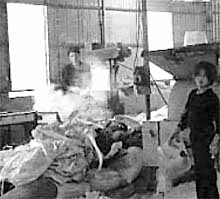
2 - The destinations in China are unregulated, polluting factories that, among other repugnant policies, employ children as sorters within close proximity to toxic ovens that smelt and reform the plastic. Are we so unprincipled that we would ship recyclables to foreign destinations knowing that their low health standards would endanger the workers that handle our trash? Should we credit those shipments for landfill diversion?

3 - Airbourne particulate matter from all unregulated Chinese combustion factories reaches back to the U.S. In a recent article in the San Diego Union Tribune entitled China's growing air pollution reaches American skies, UC/David researchers have evidence that as China consumes more fossil fuels to feed its energy-hungry economy, the U.S. is seeing a sharp increase in trans-Pacific pollution that could affect human health, worsen air quality and alter climate patterns.

4 - Plastic and trash debris from throughout Asia accumulates and returns to North America via Pacific ocean currents. In a story titled Plague of Plastic Chokes the Seas writers for the Los Angeles Times detailed evidence of waste that was accumulating in giant offshore gyres:

The debris can spin for decades in one of a dozen or more gigantic gyres around the globe, only to be spat out and carried by currents to distant lands. The U.N. Environment Program estimates that 46,000 pieces of plastic litter are floating on every square mile of the oceans. About 70% will eventually sink.


The purpose of this article is not to point fingers at the recycling industry. Rather, to insist that the California Integrated Waste Management Board's attempts to modernize California's recycling policies, including diversion credits, receive the full backing and support of the California legislature – which it clearly has not. California not only needs to reduce the source of its waste and expand programs for dealing with more types of waste, but also must update the definition of transformation and conversion technologies so that we can process more waste, more completely while creating "green collar jobs" for our own workers. These are the objectives of AB 2118, currently hung up in negotiation before the California Assembly Natural Resources Committee.

Exporting our waste to poorer countries is unprincipled and uncivilized. Furthermore, CTs represent a new opportunity to significantly expand our recycling efforts, reduce landfill demand, suppress pollution of our atmosphere and oceans, reduce greenhouse gases, and create new energy resources to help meet the electricity and fuel needs of future generations both here and abroad.


technorati , , , , , , ,

Spinning “Gold” Out of Trash


With its huge population and guilt-free car culture, California is the world's largest consumer of gasoline. By state regulation, 5.67% of the fuel pumped is actually ethanol - which is used as an oxygenate for gasoline. As a result, California is also the world's biggest consumer of ethanol - closing in on 1 Billion gallons per year.

As a rich agricultural state, one would think that there would be a huge production of corn or sugar cane to produce ethanol to meet the demand. Not so. 95% of the ethanol consumed is imported from, primarily, the Midwest by truck. There is no corn farming to speak of in California, nor will we see a sudden switch in cultivation. New ethanol plants located there will be shipping the corn in from surrounding states.

Assuming that California wants to become self-sufficient in ethanol, what will the feedstock be if not corn or sugar cane? The answer is agricultural, forestry, and urban waste. Being a heavily wooded, agriculturally rich, population booming, and super-consuming state means an incredible amount of waste. Therefore, progressive thinkers in California are looking to its waste streams to provide feedstock for the next big thing - biomass conversion of waste into biofuels including cellulosic ethanol, with the co-generation of electricity.

Such a switch couldn't come at a better time. Many professionals in the waste disposal industry recognize that major urban centers like Los Angeles will be faced with a "Peak Landfill" problem way in advance of a "Peak Oil" problem. Available land is scarce in a region of burgeoning development, NIMBYism, and accelerating waste disposal growth.

Kay Martin, Ph.D is vice president of the BioEnergy Producers Association. She directed Ventura County's solid waste programs from 1987 to 2004. She has been an active proponent of waste diversion from landfills for over a decade. She has written an incisive article about the need for landfill diversion and the potential of bioenergy production using conversion technologies. Here are some excerpts from a recent article she wrote for the Ventura County Star - a neighboring county of Los Angeles:

----------------------
S.V. Landfill has chance to spin gold out of trash
By Kay Martin

...the total amount of garbage disposed in the county and statewide has not changed much over the past 10 years, despite the best efforts of local governments, businesses and residents to recycle. Recent gains made by recycling have been largely eclipsed by the effects of population and economic growth, and this trend is expected to continue. The growing waste problem is real, and requires some strategic planning now to avert a future crisis.

...Complicating the picture of where waste will flow in the future is the disappearance of local landfills. About the same time that recycling laws were passed, the federal government imposed stringent new standards on disposal sites intended to abate air and groundwater pollution threats. These costly permitting standards contributed to a 63 percent decline in the number of landfills nationally since 1988. The trend is for fewer and larger facilities, more remote from urban centers.

Several landfills in our neighboring Southern California counties are slated for closure, and NIMBY factors have trumped attempts at siting new ones, save for expensive desert landfill options accessible only by rail.

Role for bioenergy

The factor that should weigh heaviest in decisions to expand the Simi Valley Landfill, however, is the emergence of new "bioenergy" industries that can convert about 80 percent of the materials currently going to landfills into environmentally beneficial products — green power, biofuels and a variety of chemicals that reduce our reliance on petroleum. Moreover, because these industries produce valuable commodities, they can be cost-competitive with landfills. Bioenergy plants are operating successfully in both Europe and Japan, and are in various stages of development in other parts of the United States. The central question is, should we be looking to simply bury our wastes in the decades to come, or should we take positive steps now to turn these wastes into resources that can help build a more sustainable society?

The county of Santa Barbara, and the city and county of Los Angeles are each actively engaged in procurement processes to site bioenergy facilities (so-called "conversion technologies") to reduce and ultimately to replace their dependence on landfills.


technorati , , , , , ,

Tires-to-Ethanol Facility Planned for New Jersey

Startech Environmental Corporation and Fuel Frontiers, Inc. (FFI - formerly known as Future Fuels, Inc.), a subsidiary of Nuclear Solutions Inc., have announced a Strategic Alliance Agreement and progress toward establishment of a waste-to-ethanol facility in Toms River, New Jersey by late 2007. Initially, the facility is expected to process 100 tons of tires per day with additional modules added later. The Startech Plasma Converter system will convert the feedstock into Plasma Converted Gas (PCG)™, a syngas, which FFI will, in turn, convert into ethanol using a catalytic process.

The press release, without background information on the principals, is provided below.

----------------

Startech Environmental and Future Fuels Form a Strategic Alliance for the Production of Ethanol Fuel from Tires
First-of-its-kind Project to be the $84 Million Future Fuel Tires-to-Ethanol Facility in Toms River, New Jersey

WILTON, Conn., March 15 /PRNewswire-FirstCall/ -- Startech Environmental Corporation (OTC Bulletin Board: STHK), a fully reporting company, announced today that Startech and Future Fuels, Inc., (FFI) a subsidiary of Nuclear Solutions, Inc., (OTC Bulletin Board: NSOL) of Washington, D.C., have formed a Strategic Alliance Agreement to mutually obtain contracts for waste-to-ethanol facilities and also for FFI's own $84 million Waste-to-Ethanol Facility to be constructed in Toms River, New Jersey.

The Company has also received the Letter Of Intent from FFI for FFI's purchase of a 100 ton-per-day Startech Plasma Converter System (PCS) for installation in the first-of-its-kind Waste-to-Ethanol Facility in Toms River, scheduled to go on-line in late 2007. The PCS will safely and completely destroy the tires in its process that results in a clean synthesis gas product called Plasma Converted Gas (PCG)™. The Plasma Converter will be attached to the front of the FFI system. PCG produced will be piped directly into the FFI system to make commercial fuel-grade ethanol for sale. Plans also call for the Toms River Facility expansion to include a series of additional Startech 100 ton-per-day modular Plasma Converter Systems.

President of FFI, Jack Young, said, "We welcome partnering with Startech to fuse their expertise and commercial experience in plasma processing technology with FFI's unique business model to convert abundant waste feedstocks into ethanol. Where Startech provides front-end technology to transform a variety of waste products into syngas, FFI provides the back-end catalytic process to convert that syngas into useful products such as ethanol, higher alcohol fuels and synthetic fuels, like diesel, gasoline and kerosene (jet fuel). The Strategic Alliance between FFI and Startech will open more doors into the U.S. ethanol market for both companies as well as to customers in Europe, Asia and South America where Startech currently has initiatives underway," states FFI President Jack Young.

Joseph F. Longo, Startech president said, "The Startech-FFI teaming is a perfect fit that will help increase Startech's market penetration and sales at home and overseas. As a result of the FFI press release on March 13, 2006 announcing the Alliance, we have already received lively interest from our Sales Representatives, Distributors and potential customers in the U.S., Central America, Australia, Asia and the European Union.

"We are especially pleased to know that we will be a significant part of the new $84 million FFI Toms River Ethanol Facility.

"Ethanol is an important renewable fuel, derived from ubiquitous feedstock materials previously regarded as wastes. When added to gasoline, it will help America move further towards energy independence and actually reduce greenhouse gas emissions.

"Startech processing customers are paid for receiving waste feed stocks at the front-end of the System and paid for producing and selling the resulting commercial products at the back-end. To the many commodity products that can be made from PCG, we have now added FFI fuel-grade ethanol fuel. Fuel-grade ethanol is about 199 Proof. Two hundred proof is 100% ethanol. Industrial ethanol, for paint thinners, solvents and so forth, is typically about 160 Proof.

"An important fact sometimes overlooked is that waste is an inexhaustible, renewable, ever-recurring resource."


---------------

Additional technical information is published at The Energy Blog by James Fraser - thanks James!


technorati

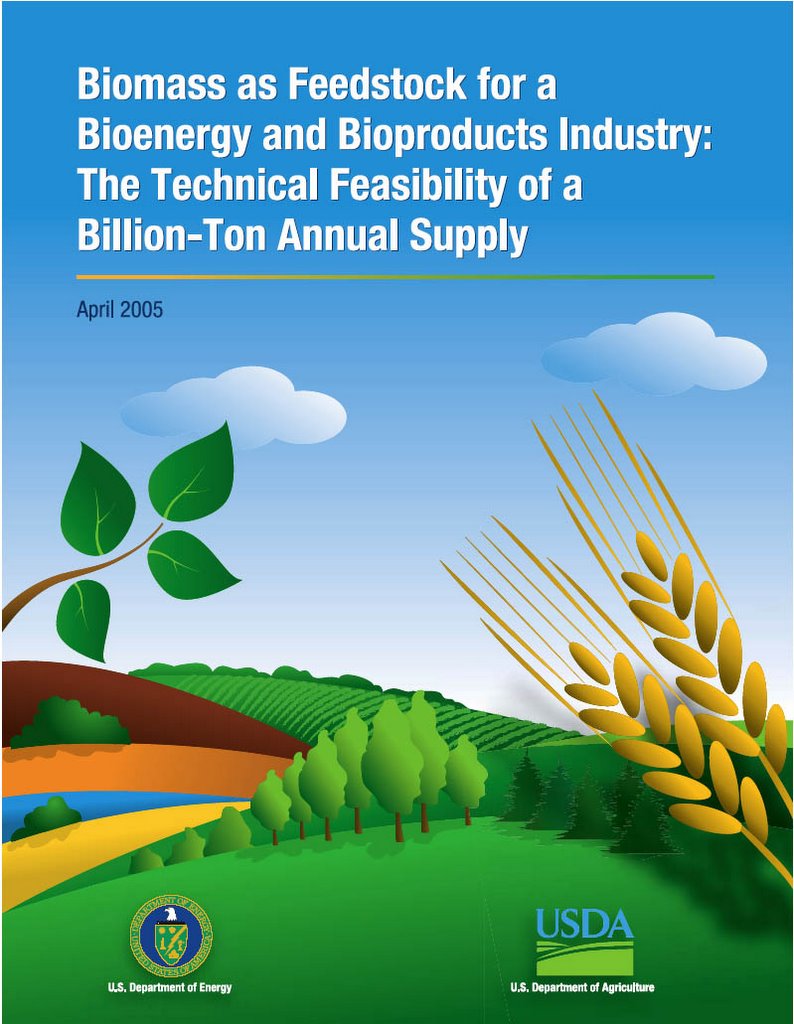
Biomass as Feedstocks for a Bioenergy and Bioproducts Industry: The Technical Feasibility of a Billion-Ton Annual Supply

Published on the U.S. Department of Energy's Bioenergy Feedstock Information Network (BFIN) website is a factual report of the biomass potential of the United States from agricultural and forestry sources. It contains charts and graphs analyzing and organizing the major categories of resources available. While many critics of ethanol as a longterm solution to U.S. liquid fuel needs point to the limits of corn availability to supply sugar fermentation in sufficient quantity, this report accepts the broader view that all biomass, including what we consider agricultural and forestry waste, will be convertible to ethanol through emerging production processes.

----------------

Biomass as Feedstocks for a Bioenergy and Bioproducts Industry: The Technical Feasibility of a Billion-Ton Annual Supply


Biomass is already making key energy contributions in the United States, having supplied nearly 2.9 quadrillion Btu (quad) of energy in 2003. It has surpassed hydropower as the largest domestic source of renewable energy. Biomass currently supplies over 3 percent of the total energy consumption in the United States — mostly through industrial heat and steam production by the pulp and paper industry and electrical generation with forest industry residues and municipal solid waste (MSW). In addition to the many benefits common to any renewable energy use, biomass is particularly attractive because it is the only current renewable source of liquid transportation fuel. This, of course, makes it an invaluable way to reduce oil imports — one of our nation’s most pressing energy and security needs. Biomass also has great potential to provide heat and power to industry and to provide feedstocks to make a wide range of chemicals and materials or bioproducts.

The overall mission of the U.S. Department of Energy’s (DOE) Office of Energy Efficiency and Renewable Energy (EERE) is to strengthen the nation’s energy security, environmental quality, and economic vitality in public-private partnerships that enhance energy efficiency and productivity; bring clean, reliable and affordable energy technologies to the marketplace; and make a difference in the everyday lives of Americans by enhancing their energy choices and their quality of life.

The purpose of this report is to assess whether the land resources of the United States have the potential to produce a sustainable supply of biomass that can displace 30 percent of the country’s current petroleum consumption.

This study found that the combined forest and agriculture land resources have the potential of sustainably supplying much more than one-third of the nation’s current petroleum consumption. Forest lands, and in particular, timberlands, have the potential to sustainably produce close to 370 million dry tons of biomass annually.

Agricultural lands can provide nearly 1 billion dry tons of sustainably collectable biomass and continue to meet food, feed and export demands. This estimate includes 446 million dry tons of crop residues, 377 million dry tons of perennial crops, 87 million dry tons of grains used for biofuels, and 87 million dry tons of animal manures, process residues, and other residues generated in the consumption food products.

In the context of the time required to scale up to a large-scale biorefinery industry, an annual biomass supply of more than 1.3 billion dry tons can be accomplished with relatively modest changes in land use and agricultural and forestry practices.