Showing posts with label report. Show all posts

May 25, 2008

Sustainable Forestry for Bioenergy and Bio-based Products

To many preservationists the term "Sustainable Forestry" is an oxymoron. To them all management of forests is unnatural, and therefore unsustainable. I have two questions for them:

1 - If your garden was infested with bugs, suffering from lack of soil nutrients, invaded by weeds, recently burned, or eroding from water damage, would you intervene by managing it? If yes, then why should forests be treated differently?
2 - Hasn't civilization already changed the character of our natural forests to a point from which they will never return to a "natural" state?

Even the experts of the USDA Forest Service would agree with the second question. Some of the problems that are plaguing our public forest lands are the result of aggressive fire suppression of the mid-1900's that were initiated in response to massive fires of the period. If we want to restore our forests, we need to return them to a profile more closely resembling the 1800's with care to make sure that the restored profile is more sustainable. But it will take management to get there, and management to sustain it in the face of growing population, climate change, and global competition for energy feedstocks.

Forest management is necessary. The expanded interface between wildlands and civilization (called "Wildland Urban Interface") is inevitable and the current high density (number of trees per acre) of undermanaged forests is changing their character. The consequence could be a spiral of forest wildfire and decay causing unprecedented greenhouse gas emissions, leading to more global warming, leading to more greenhouse gas emissions. The magnitude of the problem potential dwarfs emissions from other sources.

The forest industry is ready to lead the way to more sustainable forest management practices. The Southern Forest Research Partnership (SFRP) is a leader in research examining how the use of woody biomass can be expanded to aid the health of our forests while insuring that health is sustainable. SFRP research is available online with digital manuals and powerpoint presentations that can be used to train the public about environmentally sustainable bioenergy production systems.

I met up with Dr. Larry Biles, Interim Director of SFRP, at the 2008 Smallwood conference in Madison, WI who had barely enough time during his presentation to outline the wealth of SFRP information available online. Their 300-page training manual is located the Forest Bioenergy website (under Training Tools). They also have a forest encyclopedia (actually a series of several encyclopedias that focus on specific topics) and he highly recommended both the Forest and Range and Interface South websites that provide useful information for practitioners of forest management.

He gave me a CD of the training materials and I found them to be extremely well written and up-to-date (having been published in September, 2007). They really do "span the gap between knowledge and application."

Of particular interest to me was Module 7: Environmentally Sustainable Bioenergy Production Systems:

This module provides an overview of adaptive forest management along with international agreements and various certification systems. It covers issues related to forest soils, water quality, and biodiversity conservation. Specific issues include soil compaction, streamside management zones, and the management of dead wood.

The final part of this module deals with designing low impact operations. Using tools and information presented previously, the readers learn how to plan a low-impact operation. A summary of the concept of best management practices and links are provided to each state’s specific BMP program. You will learn about the proper application of these practices to conserve and protect the environmental sustainability of the forest while maintaining biomass and timber productivity.

The SFRP and supporting organizations have provided a tremendous service collecting this information and providing straightforward media for its distribution and presentation. The slides are a gold mine for presenters who wish to engage stakeholders in decisions affecting the management of forests.

----------------
technorati , ,

August 24, 2007

California's Zaca Fire and Global Warming


Click to enlarge

Here's a question I haven't seen in the press...

What is the impact of public forest wildfires on global warming?

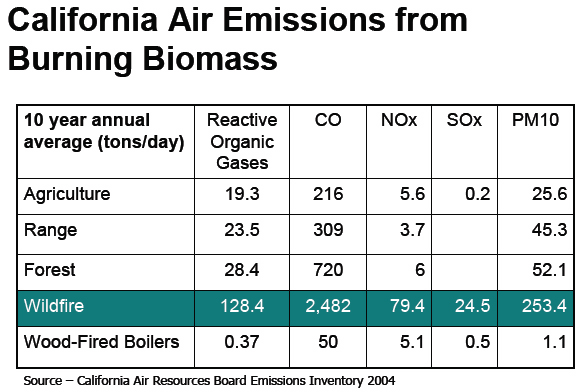
I have seen plenty of inferences that global warming is contributing to the cause of wildfire spread and ferocity but virtually nothing on how the burst of fire temperatures, soot, ash, carbon monoxide, and other toxic emissions impact global warming. No journalists make the connection between the rash of horrific megafires of the last two decades and the precipitous rise in carbon emissions during that same time.

U.S. Senator Pete Domenici recently testified...

When the Hayman Fire burned in Colorado in 2002, NASA scientists estimated that the fire was emitting more carbon dioxide in one day than all the vehicles in the United States emitted in a week.

That fire lasted over a month. The Spring 2007 megafire in Georgia and Northern Florida (the biggest in Georgia history) lasted even longer. The size, length, and ferocity of these fires is not normal - at least not prior to 1980.

Most animal deaths during and after a wildfire are caused by asphyxiation, not the flames themselves. In a sense, the "canary warning" to humans has been given. Now we must act to save not only forest wildlife, but all animals including humans who are in the path of wildfire plumes.

As the huge Zaca fire 9 miles north of bucolic Santa Barbara, California nears completion of its second month of devastation, it is time to ask some environmental questions:

Are we reaping the result of failure to adequately harvest excess forest fuel, reforest past forest acreage, and manage public forests as efficiently as private forests are managed?

Are public perceptions, litigation, and policies designed to protect wildlife diversity having the opposite effect? Stated another way, do efforts to preserve forests actually spell their doom and destroy the habitats of their occupants?

Can the federal and state governments ever be expected to allocate sufficient taxpayer funds to adequately manage the vast public forests under their stewardship?


Here are the latest facts on the Zaca Fire.
--------------------

Basic Information
Incident Type: Wildland Fire
Cause: Human Caused
Date of Origin: 07/04/2007 at 1053 hrs.
Location: 9 miles north of Santa Barbara

Current Situation
Total Personnel: 2,545
Size: 235,601 acres (1/3 the size of Rhode Island)
Percent Contained: 83%
Estimated Containment Date: 09/07/2007 at hrs.
Fuels Involved: Heavy brush containing a high dead component. Some conifer at higher elevations. Live fuel moistures are at 49% which is well below critical levels. A continuous fuel bed lies ahead of the fire.

Growth Potential: Extreme.
Terrain Difficulty: Extreme.
-------------------

I toured California in a motor home between Santa Barbara and Yosemite August 9th through 17. Here are some photos I took in Yosemite August 15th (click to enlarge)...


As I was travelling south August 17th on the 99 FWY near Bakersfield, we caught sight of the smoky plume of the Zaca fire which blotted out the sun at 5pm - actual darkness - (click to enlarge)...


This California roadtrip experience left an indelible impression - not the one I was expecting.

technorati ,

June 8, 2007

Forest certification programs: FSC, SFI, and Tree Farm

Rightful concern about tropical "deforestation" should never be confused with controlled American logging of our natural wood resources as carried out under the watchful eye of national and international forest certification programs.

Right now it is estimated that volume of annual net timber growth in America is 36% greater than the volume of annual timber removals. This statistic comes from an excellent new report titled The State of America's Forests produced by the Society of American Foresters (available online) :

The Society of American Foresters has published a comprehensive, peer-reviewed report on the status of America’s forestland. This 68-page report outlines the latest facts and figures in easy to read graphs, charts, tables, and supporting commentary. The State of America’s Forests is the most definitive, one-source compilation of credible forestry facts touting more than 50 sources and peer-review by academia, non-governmental organizations, and the USDA Forest Service.

As pointed out in the report, trees not only define our landscape but they freshen the air we breath, purify the water we drink, provide habitat for wildlife, and nourish the ground we walk upon. Proper stewardship of our timberlands enable the forest products industry to provide the studs in our walls, the wood in our furniture, and the paper in our books, magazines, and newspapers. Wood has also been the primary renewable feedstock of our energy past, present, and future. 44% of American renewable energy comes from wood and wood residuals - more than any other source.

To confuse the desire for preservation of our forests with the need for conservation would be a huge mistake. According to Wikipedia The distinct difference between conservation and preservation, is that conservation allows for the sustainable development paradigm, whereas preservation is complete restriction. Some acres must be protected it is true, but untended forests grow at a phenomenal rate and their ecology inevitably changes with them.

While the area covered by forests has not changed in 100 years, "historical trends show that the standing inventory (the volume of growing stock) of hardwood and softwood tree species in U.S. forests has increased continually over the past five decades - by 49% between 1953 and 2006. In the same time period, the total annual net growth of growing stock (annual growth minus annual mortality) increased 75 percent."

The consequences of untended forests include overgrowth of underbrush leading to wildfires (which wipe out wildlife forest habitats and have a devastating impact on carbon balance of the atmosphere) as well as unstoppable insect infestations that spread faster through tree proximity.

There is a section in the report that depicts the current level of certification that is being practiced in the world. "Originally developed to address the issue of tropical deforestation", 87% of certification is actually taking place in "temperate and boreal regions in developed countries."

----------------
The State of America's Forests
The Society of American Foresters

There are three major certification schemes in place: the Sustainable Forestry Initiative (SFI), the Forest Stewardship Council© (FSC), and the American Tree Farm System. In the U.S. 107 million acres representing 14% of total U.S. forests are certified. 25% of private forestlands are certified.

Forest certification programs continue to develop and evolve. In 1999, the Programme for the Endorsement of Forest Certification schemes (PEFC) was founded as the global umbrella organization for the assessment of and mutual recognition of national and international certification schemes.

With 65 years of history, the American Tree Farm is the oldest voluntary, third-party forest management verification process in the country. It certifies the forestry practices of family-owned and other nonindustrial private landowners.

The American Tree Farm System® (ATFS), a program of the American Forest Foundation, is committed to sustaining forests, watershed and healthy habitats through the power of private stewardship.

Since 1941, ATFS has educated and recognized the commitment of private forest owners in the United States. Currently, ATFS has 27.5 million acres of privately owned forestland and 87,000 family forest owners who are committed to excellence in forest stewardship, in 46 states. Tree Farmers share a unique commitment to protect wildlife habitat and watersheds, to conserve soil and to provide recreation for their communities while producing wood for America. These individuals hold the key to the kinds of forests, forest activities and forest resources future generations of Americans will enjoy.

ATFS has established standards and guidelines for property owners to meet to become a certified Tree Farm. Under these standards and guidelines, private forest owners must develop a management plan based on strict environmental standards and pass an inspection by an ATFS volunteer forester every five years.


The Sustainable Forestry Initiative (SFI) program was developed by the American Forest and Paper Association in 1994 to document the commitment of member companies to sustainable forestry. In 2000, an independent 501(c)(3) multistakeholder organization, the Sustainable Forestry Board, was established to oversee SFI standards development and the certification process. SFI certifies companies in the United States and Canada. Thus far, SFI is the only U.S. scheme officially recognized by PEFC.

The SFI Standard spells out the requirements of compliance with the program. The SFIS is based on nine principles that address economic, environmental, cultural and legal issues, in addition to a commitment to continuously improve sustainable forest management.

The SFI program has a new standard valid from 2005 through 2009. The SFIS contains 13 objectives covering sustainable forest management, procurement of wood and fiber, public reporting, continuous improvement and mitigating illegal logging.

The Forest Stewardship Council (FSC), founded in 1993, is an international nonprofit organization whose members, from more than 70 countries, represent social, economic, and environmental interests centered on forests.
FSC sets forth principles, criteria, and standards that span economic, social, and environmental concerns. The FSC standards represent the world’s strongest system for guiding forest management toward sustainable outcomes. Like the forestry profession itself, the FSC system includes stakeholders with a diverse array of perspectives on what represents a well-managed and sustainable forest. While the discussion continues, the FSC standards for forest management have now been applied in over 57 countries around the world.


technorati , ,

January 29, 2007

Food vs. Fuel? U.S. Farmers Can Produce Both

The Biotechnology Industry Organization has released a study that addresses the question “Can American farmers feed the growing biofuel industry?” The report details the potential of cellulosic biomass as an energy resource and the promise of no-till cropping for greater residue collection. It also proposes guidelines and incentives to encourage farmers to produce, harvest and deliver sufficient feedstock to the growing biorefinery and biofuels industry in an economically and environmentally sustainable way.

Brent Erickson, executive vice president of BIO’s Industrial & Environmental Section, said, “Industrial biotechnology has enhanced the efficiency of biofuel production and made possible production of a range of polymers and chemicals from agricultural starting materials. The next challenge facing the biorefinery industry is producing, harvesting and delivering abundant feedstocks in an economically and environmentally sustainable fashion. This report begins to address that issue.”

Here are some statements from the report's Executive Summary:

----------------
Food Plus Fuel, Not Food or Fuel: U.S. Farmers Can Produce Both
The potential of cellulosic biomass as an energy resource and the promise of no-till cropping for greater residue collection.

In order to meet the U.S. Department of Energy (DOE) goal of 60 billion gallons of ethanol production and 30 percent displacement of petroleum by 2030, new feedstock sources will be required to supplement high-efficiency production from grain. A robust sustainable supply chain for cellulosic biomass from agricultural residues and dedicated energy crops will be needed within a few years. Nearly 1 billion dry tons of cellulosic biomass could be supplied by U.S. agricultural lands in the form of crop residues and dedicated energy crops.

A growing list of companies has announced intentions to begin construction of cellulosic biorefineries. One challenge for the emerging cellulosic biomass industry is how to produce, harvest and deliver this abundant feedstock to biorefineries in an economically and environmentally sustainable way.

An environmental and economic ‘optimum’ removal will balance sufficient retention of residues to avoid erosion losses and maintain soil quality while using excess residue as biorefinery feedstocks.

Ultimately, growing demand for crop residues will likely prove a strong additional driver for the transition to more widespread no-till cropping. Once a market for agricultural residues develops, individual farmers or groups of farmers may elect to adopt no-till cropping to attract biorefineries to their area. Residue collection may also enable notill cropping in wetter regions, such as the northern Corn Belt, where excess residues currently hamper germination and reduce yields.

In addition to economic benefits for farmers, sustainable production and collection of agricultural residues has the potential to deliver substantial benefits for the environment, such as reduced runoff of soil and fertilizers. But the greatest environmental benefits may be to the global climate through reduced emissions of fossil carbon and enhanced sequestration of soil carbon.

Congress should consider adopting supportive policy measures in the 2007 Farm Bill, including:
• Funding for accelerated development and production of one-pass harvesting equipment;
• Development and distribution of simple-to-use soil carbon models to allow farmers to compute how much crop residue can be collected without degrading soil quality;
• Assistance to farmers to encourage the transition to no-till cropping for biomass production;
• Incentives for the development and expansion of short line and regional rail networks;
• Funding for demonstration projects to streamline collection, transport and storage of cellulosic crop residue feedstocks;
• Development of a system to monetize greenhouse gas credits generated by production of ethanol and other products from agricultural feedstocks; and
• Funding for programs to help farmers identify and grow the most suitable crops for both food production and cellulosic biomass production.

Cellulosic biomass from agricultural residues and dedicated energy crops represents a highly promising new source of feedstock material for the production of ethanol, renewable chemicals and a range of commercial biobased products. Residues from existing crops can be utilized to greatly expand current biofuels production. American farmers are poised to deliver.


technorati , , , , , ,

December 15, 2006

Global BIOstock/BIOfuels Database

It is always gratifying to suddenly find a resource online that you considered so necessary that you had considered creating it yourself. Thanks to Friends of the Earth and the financial support of the Wallace Global Fund, this one happens to be free. Here is the website's introduction to this useful resource:

---------------------
The Global Biofuels Database

In response to mounting global concerns about the costs and impacts of fossil fuel consumption, the development of biofuels is growing rapidly around the world. Despite the recent biofuels boom, however, many of the environmental and social impacts of a biofueled world have not been fully examined or addressed.

To address the need for greater understanding of biofuels impacts, Friends of the Earth has developed the Global Biofuels Database, an online database that enables users to compare the environmental and social impacts of a wide range of transport biofuels.

Although a great deal of information is presented here, the Global Biofuels Database is still being expanded and improved. We are eager to receive your feedback, comments and input for an updated version of the database.

To use the Global Biofuels Database, please... START HERE


technorati , , ,

December 7, 2006

U.S. D.O.E. Information on "BIOstock" & Legislation

The U.S. Department of Energy Energy Information Administration (EIA) has a wealth of online biomass and energy data that shows the immensity of the biomass potential in the United States. It also catalogs the breadth of federal and state-by-state legislative efforts to address the alternative fuels challenge.

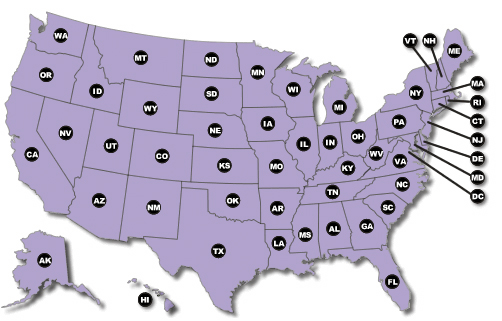
Want to start a national renewable energy enterprise? Then you might want to take a closer look at the Biomass Resources on Federal Lands map. It shows (in pink) where biomass resource potential outside Federal lands is and where (in green) 469 existing electric generating plants exist that utilize biomass energy. They estimate that, currently, only about 1.4% of U.S. electric energy is generated using biomass fuels.

That will change. The resource documents data up to 2004 but will be updated again this month.

The EIA site also contains a tutorial section aimed at students who are interested in learning energy basics. One entry of the Energy Kid's Page focuses on Biomass-Renewable Energy from Plants and Animals.

On the subject of Biomass...

"Biomass energy is derived from three distinct energy sources: wood, waste, and alcohol fuels. Wood energy is derived both from direct use of harvested wood as a fuel and from wood waste streams. The largest source of energy from wood is pulping liquor or “black liquor,” a waste product from processes of the pulp, paper and paperboard industry. Waste energy is the second-largest source of biomass energy. The main contributors of waste energy are municipal solid waste (MSW), manufacturing waste, and landfill gas. Biomass alcohol fuel, or ethanol, is derived almost exclusively from corn. Its principal use is as an oxygenate in gasoline."

Database of State Incentives for Renewables & Efficiency - DSIRE is a comprehensive source of information on state, local, utility, and federal incentives that promote renewable energy and energy efficiency. The source can be researched for Renewable Energy and/or Energy Efficiency data.


technorati , , , , , , , ,

November 22, 2006

Upgrading Existing Plants for Biomass Conversion

We are beginning to see the "low hanging fruit" being plucked as aggressive ethanol development companies are buying installations and upgrading them into cellulosic ethanol plants. Just this last week two companies have made purchases in two different biostock arenas - agricultural corn waste and forestry wood chips. The companies have bought the plants for their existing procurement infrastructure, permitting, manpower, and proximity to their research facilities.

In the first case, Broin Companies of Sioux Falls, South Dakota has bought a corn dry mill in northwest Iowa to reconfigure it into a commercial-scale facility capable of converting corn fiber and stover into ethanol. They will be using Broin's patented fractionalization process to break down the fibers and then ferment the resulting starch into ethanol using their own hydrolysis process.

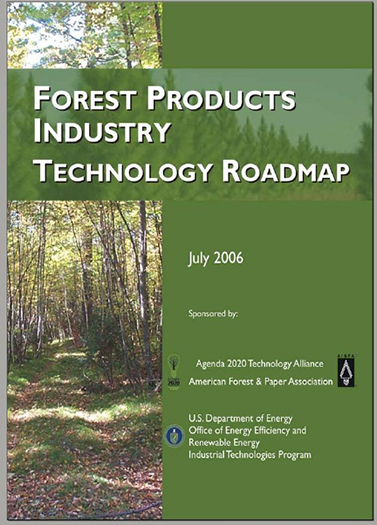
In the second case, controversial Xethanol Corp. has purchased a fiberboard factory that is close to their R&D facility at Virginia Tech to deploy a biorefinery that can convert wood chips into ethanol. This is exactly the kind of plant makeover anticipated by the Forest Products Industry Technology Roadmap study. Expect to see more.

View the entire BIOconversion Blog story HERE.


technorati , , , , , , , ,

Renaissance of the Forest Products Industry

Often maligned as a exploiter of America's forests, the Forest Products Industry (FPI) may be "behind the times" in some contexts, but it has great potential for leading the paradigm shift to renewable energy (both electricity and biofuels), reducing greenhouse gases, upgrading the nation's workforce, reducing dependence on fossil fuels, and suppressing the spread of tree diseases and forest fires due in part to global warming.

Recently released is the Forest Products Industry Technology Roadmap which provides a framework for reinventing and reinvigorating the industry through technological innovations in processes, materials, and markets. The 2006 update of the publication captures the Agenda 2020 Technology Alliance* vision and translates it into a set of focus areas and R&D priorities for each Agenda 2020 technology platform. The Roadmap provides a summary of priority technical challenges and research needs of the U.S. forest products industry, and highlights opportunities for partnerships with researchers and funding organizations.


Seven Technology Platforms Provide Focus for RD&D
1. Advancing the Forest “Bio-Refinery”
2. Sustainable Forest Productivity
3. Breakthrough Manufacturing Technologies
4. Advancing the Wood Products Revolution
5. Next Generation Fiber Recovery and Utilization
6. Positively Impacting the Environment
7. Technologically Advanced Workforce

As the publication states, the inescapable truth is that "America is the world’s largest producer and consumer of forest products. The industry is a vital contributor to the domestic economy, particularly in rural areas where many pulp and paper mills are located. In 2004, U.S. paper and wood products companies posted annual sales of close to $260 billion and employed almost one million Americans. Despite decades as a global leader, the industry is increasingly challenged by international competitors, who in some cases enjoy economic advantages in wood, labor, and environmental costs. Other competitive pressures include the growing use of electronic communication and advertising, product substitution, an aging process infrastructure, few technology breakthroughs, and scarcity of capital for new investments."

The time for a technological renaissance is now. Not only is demand for change the greatest that it has ever been, but also the "aging process infrastructure" of the industry is reaching the end of its lifecycle. Due to be replaced are Tomlinson boilers and other biomass- or fossil fuel-based boilers that are used for energy production and chemical recovery.

The FPI is calling for new investment in what it calls "Forest Biorefineries." Utilizing emerging technologies, these "optimized forest biorefineries would produce new streams of biomass-derived, high-value chemicals, fuels, and electric power while continuing to meet the growing demand for traditional wood, pulp, and paper products. This evolution could more than double economic returns on the industry’s manufacturing assets, create a significant U.S. manufacturing base for renewable transportation fuels, and help meet the nation’s need for clean, diverse, domestic energy supplies."

In addition to fulfilling functions such as providing combined process heat and power and/or recovering the pulping chemicals for re-use, the gasifiers would produce syngas, consisting largely of hydrogen and carbon monoxide. Depending on the economics of the situation, the syngas could then be burned in gas turbines to produce steam and power, used as a replacement for fossil fuels (such as natural gas in a lime kiln or fuel oil in a power boiler), or converted into transportation fuels, including Fischer-Tropsch liquid fuels or pure hydrogen.

*The Agenda 2020 Technology Alliance is an industry-led partnership with government and academia that holds the promise of reinventing the forest products industry through innovation in processes, materials and markets. Initiated in 1994 in partnership with the U.S. Department of Energy (DOE) to improve energy efficiency in the industry's manufacturing processes, Agenda 2020 is now organized as a membership alliance to accelerate research, demonstration and deployment of breakthrough technologies.


technorati , , , , , ,

Forest Industry: Bio-Solutions to Climate Change

Is there an environmentally safe role for wood industry byproducts and waste to play in providing sustainable bio-solutions to climate change? Can we really live on less paper, pulp, and lumber? Are substitutes likely to be better environmentally - with equal or less impact on carbon sequestration? What is the responsible thing to do with tree trimmings, black liquor, and bark beetle-infested trees?

Does "saving forests" include thinning them to prevent forest fires - a horrific source of toxic carbon emissions and particulate matter (see below)?

These are some of the questions that are being asked at Forestry Industry meetings like the International Seminar on Energy and Forest Products Industry (30-31 October) held in Rome.

The forest products industry is a major consumer of energy, using 6 percent of total industrial energy use in 2003. But the industry also produces energy, as well as other by-products that can be used for energy generation. It is the only sector that already generates approximately 50 percent of its own energy needs, the majority from renewable carbon-neutral biomass. Energy costs, energy supply and climate change are amongst the core issues impacting on the future of the forest products industry.

Wulf Killmann, Director of Forest Products and Economics at Food and Agriculture Organization (FAO), said that the potential of the forestry industry to help solve energy and climate change needs to be tapped. "Governments have a key role to play in encouraging industries to use cleaner and more efficient energy technologies and in promoting bio-energy."

Here are excerpts from a recent article published by Forest Newswatch:

--------------------
Can the forest products industry be part of a bio-solution to climate change?
Forest Newswatch (subscription)
Friday, 03 November 2006

The global forest products industry can play a significant role in combating climate change by optimizing the use of raw material, increasing efficiency, producing bio-energy and expanding into bio-refinery products while developing the competitiveness of the sector.

This was the conclusion of the International Seminar on Energy and Forest Products Industry (30-31 October), in which intergovernmental and private sector organisations of the global forest product industry joined forces. Participants stressed that well integrated and carefully balanced energy and forest policies around the globe set the stage for these developments. Governments, industry, institutions and society at large each have a role to play and should work together.

"The forest products industry can be part of the solution for climate change if committed to technological changes and energy efficiency," said Neil Hirst, Director of Energy Technology of the International Energy Agency (IEA). "It has the exceptional ability to become a net supplier of a range of energy products and it could, in combination with carbon capture and storage, become an important actor in removing carbon dioxide from the atmosphere."

"Wood and paper products are uniquely renewable and recyclable products that help reducing greenhouse gas emissions by absorbing carbon dioxide from the atmosphere," said Teresa Presas, Chair of the International Council of Forest and Paper Associations (ICFPA). The industry is committed to innovative energy solutions that meet the challenge of climate change, increase efficiency, reduce reliance on fossil fuel and expand the use of renewable energy sources. The industry believes that fibre from sustainable managed forests makes a positive contribution to the world's future energy supply.

"To achieve this", Presas said, "the industry needs enabling policies that support research and innovation, promote demonstration projects and improve the investment climate, specifically in this sector. Moreover there needs to be a level playing field between energy and non-energy uses of wood, considering that all this has to take place within the boundaries of sustainable forest management."

The World Wide Fund for Nature (WWF) would be glad to see the global forest product industry taking a stronger role in the energy and climate change mitigation field, but also sets some requirements.

"WWF considers that sustainable bioenergy has to be part of the global strategy to reduce greenhouse gas emissions, among other measures aiming to reduce the ecological footprint. Credible certification of bioenergy feedstocks with a focus on social and environmental issues - including greenhouse gas calculations - and land use planning are part of the solution to ensure the sustainability of development", said Duncan Pollard, Director of the WWF Forests for Life Programme.


technorati , , , , , , , ,

Biomass as Feedstocks for a Bioenergy and Bioproducts Industry: The Technical Feasibility of a Billion-Ton Annual Supply

Published on the U.S. Department of Energy's Bioenergy Feedstock Information Network (BFIN) website is a factual report of the biomass potential of the United States from agricultural and forestry sources. It contains charts and graphs analyzing and organizing the major categories of resources available. While many critics of ethanol as a longterm solution to U.S. liquid fuel needs point to the limits of corn availability to supply sugar fermentation in sufficient quantity, this report accepts the broader view that all biomass, including what we consider agricultural and forestry waste, will be convertible to ethanol through emerging production processes.

----------------

Biomass as Feedstocks for a Bioenergy and Bioproducts Industry: The Technical Feasibility of a Billion-Ton Annual Supply


Biomass is already making key energy contributions in the United States, having supplied nearly 2.9 quadrillion Btu (quad) of energy in 2003. It has surpassed hydropower as the largest domestic source of renewable energy. Biomass currently supplies over 3 percent of the total energy consumption in the United States — mostly through industrial heat and steam production by the pulp and paper industry and electrical generation with forest industry residues and municipal solid waste (MSW). In addition to the many benefits common to any renewable energy use, biomass is particularly attractive because it is the only current renewable source of liquid transportation fuel. This, of course, makes it an invaluable way to reduce oil imports — one of our nation’s most pressing energy and security needs. Biomass also has great potential to provide heat and power to industry and to provide feedstocks to make a wide range of chemicals and materials or bioproducts.

The overall mission of the U.S. Department of Energy’s (DOE) Office of Energy Efficiency and Renewable Energy (EERE) is to strengthen the nation’s energy security, environmental quality, and economic vitality in public-private partnerships that enhance energy efficiency and productivity; bring clean, reliable and affordable energy technologies to the marketplace; and make a difference in the everyday lives of Americans by enhancing their energy choices and their quality of life.

The purpose of this report is to assess whether the land resources of the United States have the potential to produce a sustainable supply of biomass that can displace 30 percent of the country’s current petroleum consumption.

This study found that the combined forest and agriculture land resources have the potential of sustainably supplying much more than one-third of the nation’s current petroleum consumption. Forest lands, and in particular, timberlands, have the potential to sustainably produce close to 370 million dry tons of biomass annually.

Agricultural lands can provide nearly 1 billion dry tons of sustainably collectable biomass and continue to meet food, feed and export demands. This estimate includes 446 million dry tons of crop residues, 377 million dry tons of perennial crops, 87 million dry tons of grains used for biofuels, and 87 million dry tons of animal manures, process residues, and other residues generated in the consumption food products.

In the context of the time required to scale up to a large-scale biorefinery industry, an annual biomass supply of more than 1.3 billion dry tons can be accomplished with relatively modest changes in land use and agricultural and forestry practices.